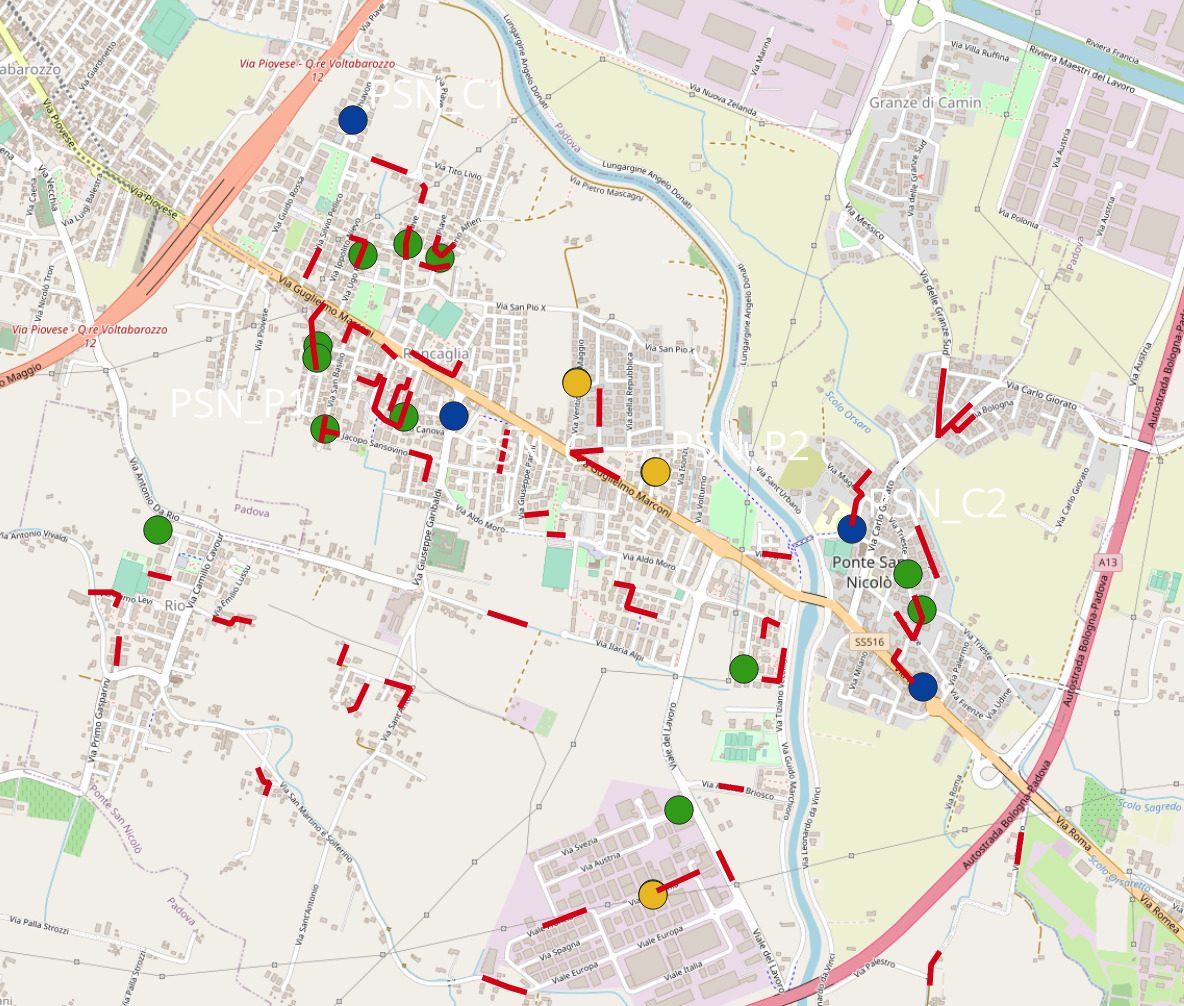

With innovative CRNS technology and Finapp probes, we redefine water leak management for smart cities and utilities. Our system enables the pre-location of network leaks by monitoring up to 150 km per day, offering a fast, non-invasive, and cost-effective water leak detection technology.
Home » Applications »
Tackling water loss with non-invasive water leak detection
Every year, about 30% of the water put into aqueducts worldwide is lost (Non-Revenue Water); in countries like Italy, this figure exceeds 40%. Traditional acoustic methods are often too slow to cover vast networks efficiently.
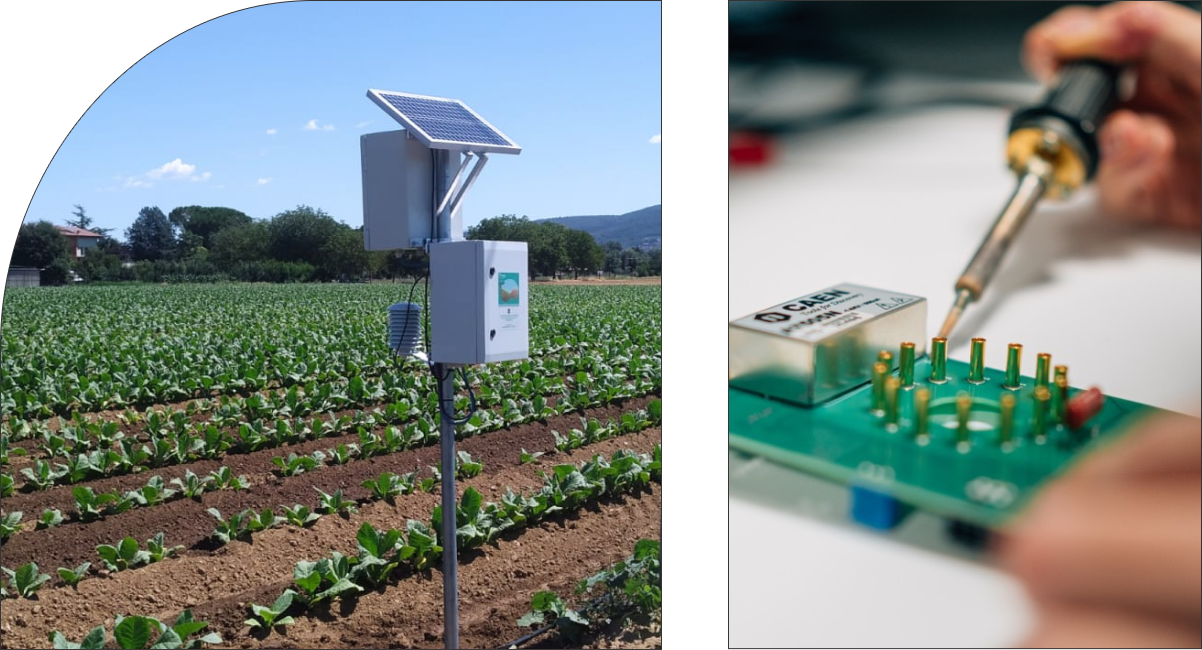
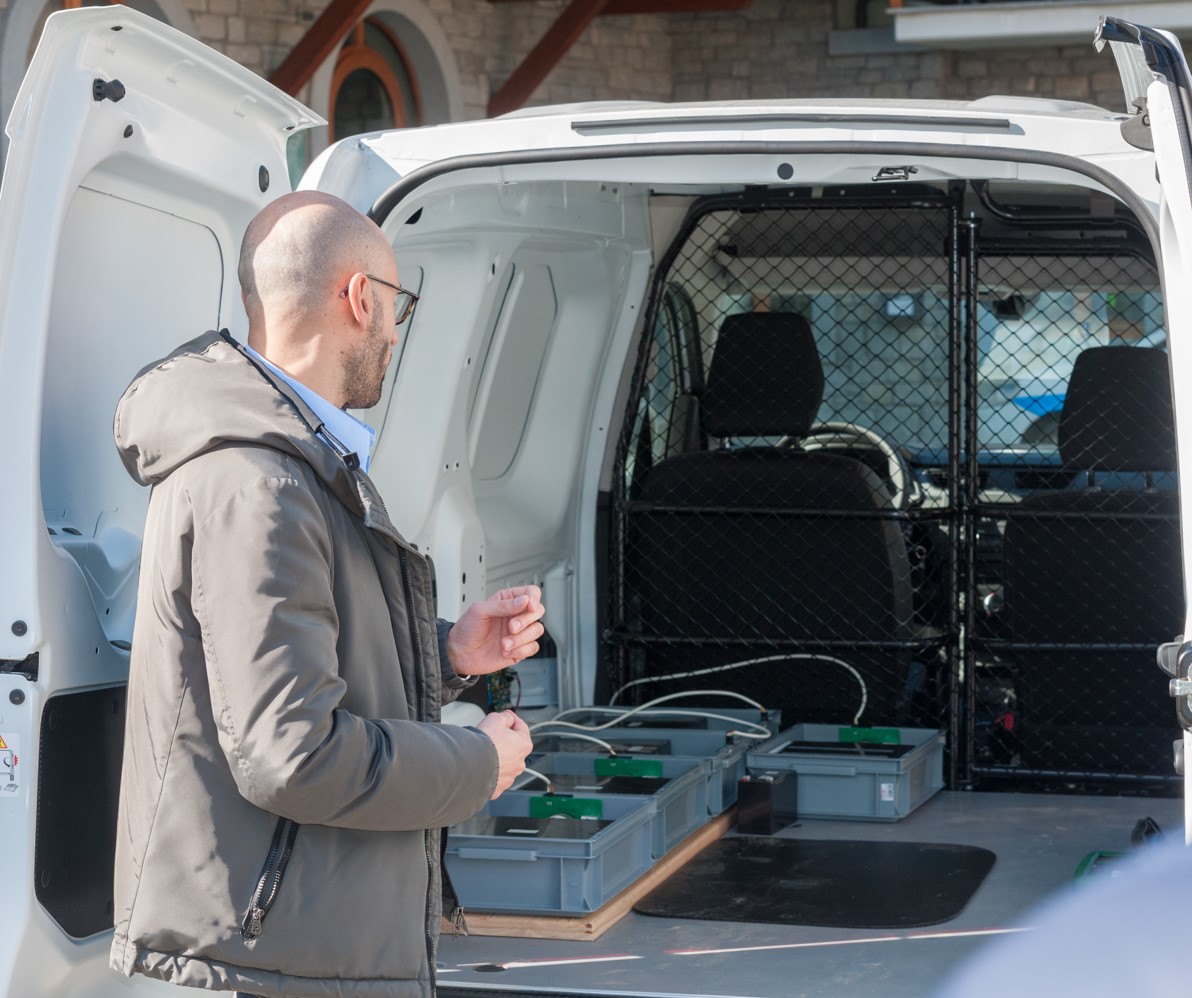
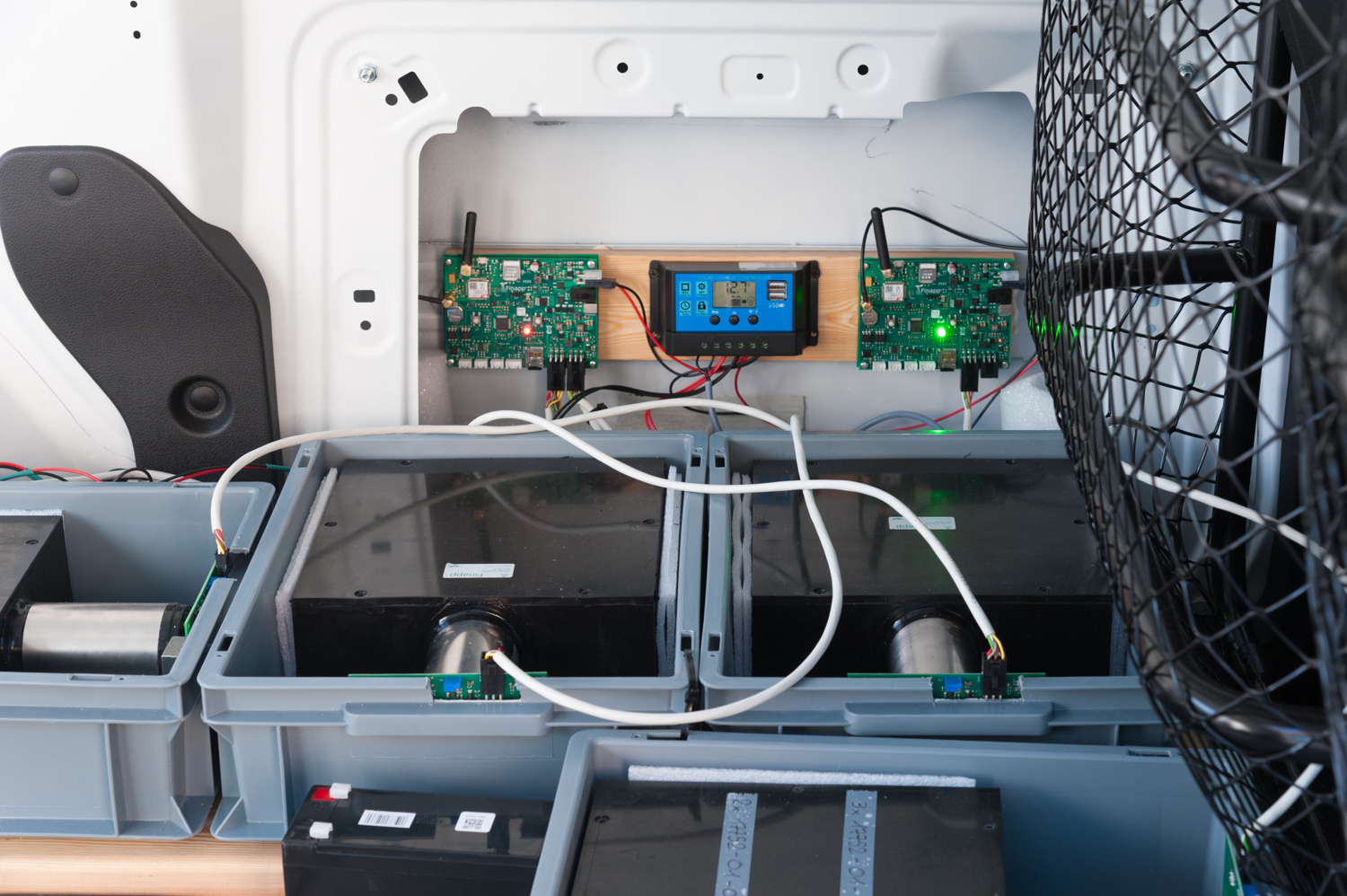
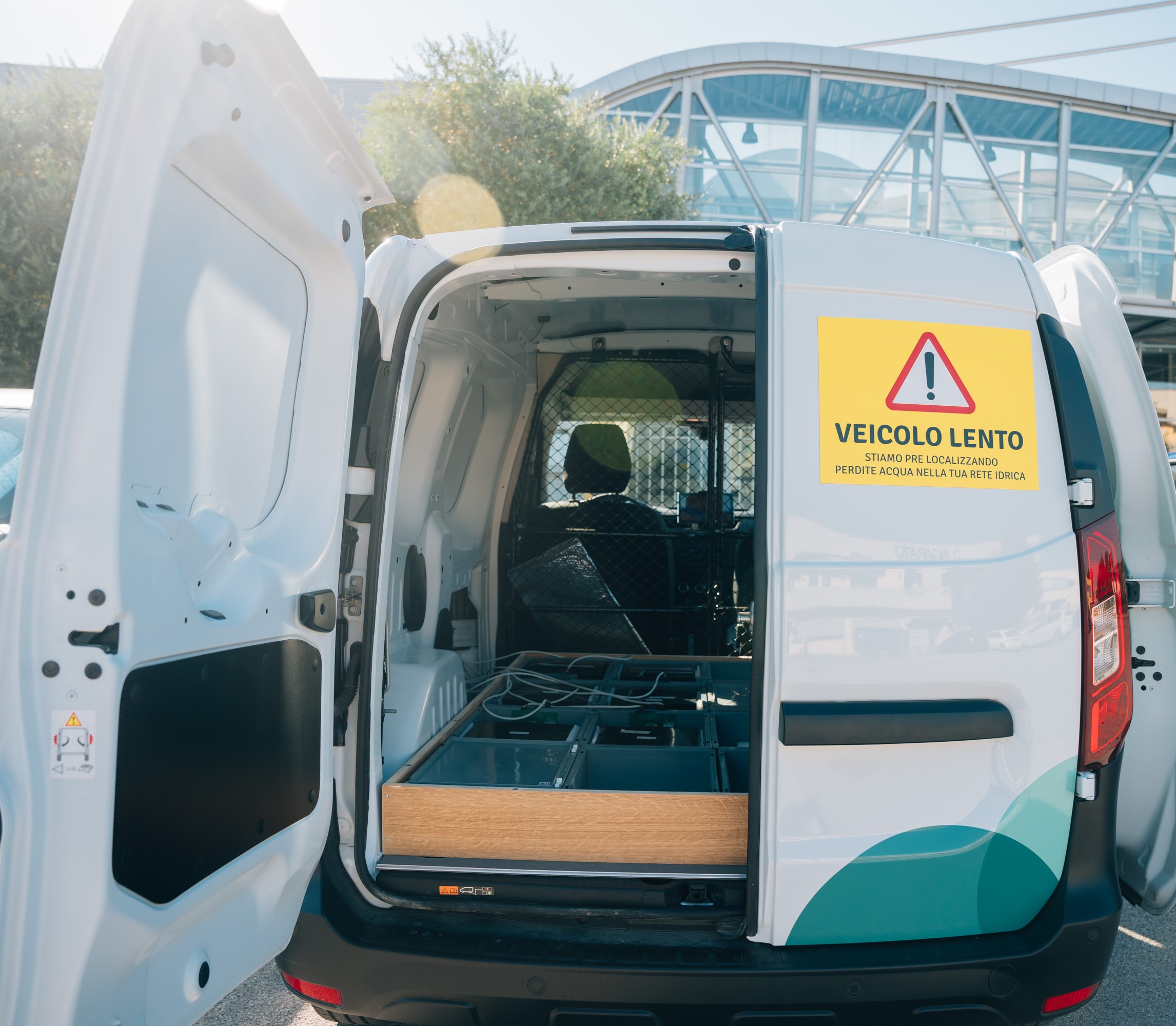
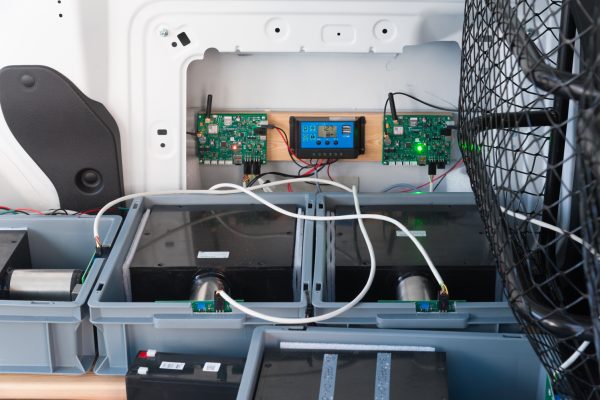
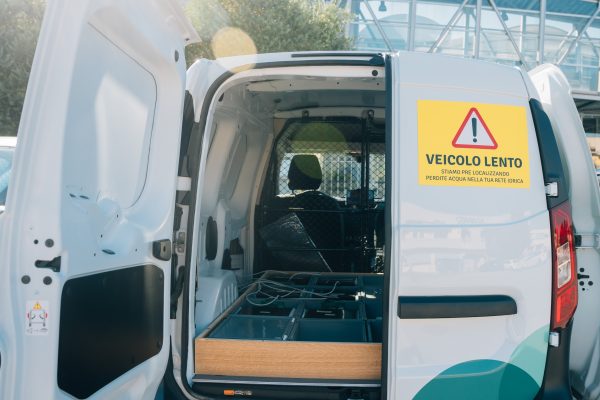
Finapp provides a revolutionary approach. We have patented a lightweight, compact Finapp Probe that reads cosmic neutrons, messengers of deep soil moisture. Mounted on our Rover vehicle, these sensors travel along roads above pipelines, detecting soil moisture anomaly detection in real-time. An increase in neutrons moderated by hydrogen signals a potential leak, allowing us to provide the network operator with a georeferenced water leak map without opening a single manhole.
How the service works
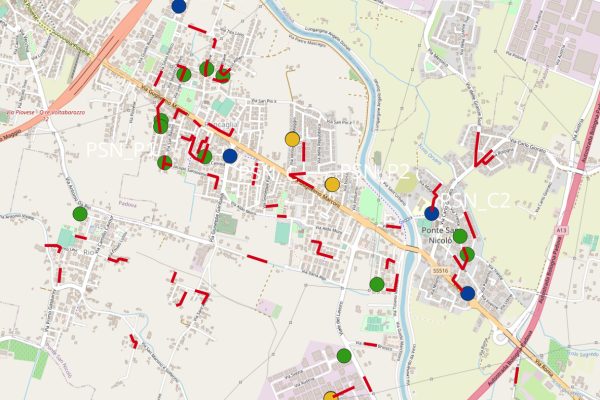
Finapp specializes in pre-location. We don’t replace your repair teams; we make them faster. By utilizing Artificial Intelligence developed through rigorous Scientific Research, our algorithm filters out noise (cars, asphalt) to identify “leaky” road sections.
- Scanning: the Rover scans the network at traffic speed (up to 50km/h).
- Filtering: the AI identifies linear sections (50-100m long) with anomalous saturation.
- Targeting: this process highlights 5-10% of the network where approx. 70-75% of the leaks are concentrated.
- Pinpointing: your teams can then focus their acoustic correlators or geophones only on these specific sections, drastically lowering time and costs compared to blind systematic searches.
Why choose cosmic rays over traditional acoustic methods?
Our cosmic ray water leak sensor offers evident operational advantages compared to traditional moisture meters for water leaks or acoustic listening sticks:
- Unmatched Speed: cover 120-150 km per day in urban centers and up to 300 km in non-urban areas. Traditional systematic research typically covers only 5-10 km/day.
- Cost-Efficiency: pre-location costs are significantly lower than systematic digging or acoustic sweeping (about one-third of the cost).
- Non-Invasive: no contact with the pipe, no manholes opened, no traffic disruption.
- Operator Independent: unlike electro-acoustic instrumentation, the reading is objective and automated, not dependent on the operator’s hearing or skill.
- High Performance: field results show that Finapp correctly detects leaks in about 70% of cases.
Turnkey commercial water leak detection services
Finapp provides a complete commercial water leak detection service. You don’t need to buy hardware or train staff.
- We Drive: we provide the manpower and the equipped vehicles.
- We Process: data processing is handled entirely by our team.
- You Repair: we deliver Geo-referenced maps (shapefiles) highlighting the risk areas. The only requirement is the geo-location of the pipelines provided by the utility operator.
More detailes
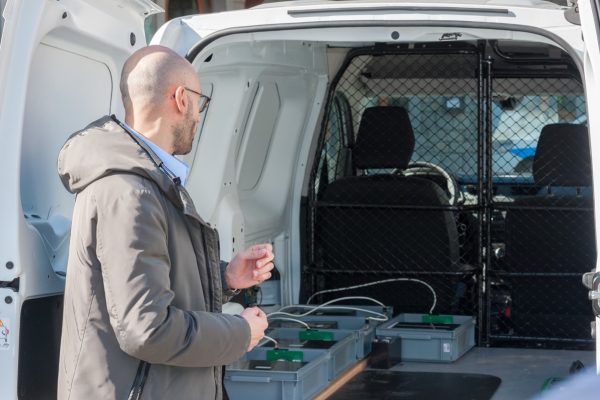
Finapp probes, set in motion, provide a soil moisture map, with a maximum resolution of 10m x 10m, even in an urban environment, since cosmic neutrons are not disturbed by the presence of buildings, asphalt, cars. With the cooperation of some operators, we have developed an artificial intelligence algorithm that has been trained to recognize known water leaks so that they can be detected even on unknown paths.
- Pre-location is defined in this way because it returns linear road sections, 50-100m long, where the algorithm identifies a possible leak. It will then be necessary to use a correlator to pinpoint the exact location of the leak.
- Pre-location “highlights” 5-10% of the network where about 70-75% of the leaks insist. Systematic search can then focus on a really small part of the aqueduct, lowering time and cost.
Service features
Finapp provides a turnkey service: manpower, means, data processing are carried out entirely by us. The only pre-requirement is the geo-location of the pipelines, which must be provided by the network operator.
Finapp provides Geo-referenced maps (shape files) in which the sections recognized as “leaky” by our algorithm are highlighted.
Data processing is done entirely by Finapp team, which is why it is possible to customize the output.
FAQ – common questions
1. Methodology & accuracy
What minimum radius can pre-localization have?
The minimum resolution radius is in the order of 10 meters. This allows us to narrow down the search area significantly for the pinpointing teams.
Following pre-localization, is a conventional assessment recommended?
Yes. Finapp acts as a “pointer.” It is advisable to carry out a traditional search with geo-acoustic instrumentation (pinpointing) only on the routes pre-localized by Finapp. This focuses your resources on the 3-10% of the network that actually matters.
In cities with skyscrapers, is Cosmic Ray monitoring effective?
Yes. Unlike GPS-only systems that might struggle in “urban canyons,” cosmic neutrons permeate through buildings. The presence of tall buildings or narrow streets does not influence the reading ability of the smart water leak sensor for cities.
What happens when a drinking water pipe runs parallel to a sewer?
The probe detects water in the ground regardless of the source. Therefore, we cannot distinguish if the moisture increase is caused by a high water table, a broken aqueduct, or a sewer leak. However, an anomaly always warrants investigation.
2. Operational Conditions
How fast can the vehicle scan?
Speed depends on the number of probes installed. Typically, we recommend a maximum speed of 30-40 km/h for optimal resolution, but configurations can allow up to 50 km/h.
Can the sensor be used in case of rain?
No. Rain wets the road surface and the topsoil uniformly, decreasing the sensitivity of the instrument to deep leaks. We strongly discourage surveys during or immediately after heavy rain.
Can monitoring be carried out at night?
Yes. Apart from rain, no other weather condition, season, or time of day influences the physics of cosmic rays. Night surveys are often preferred to avoid heavy traffic.
3. Versatility & Access
Can it be used in areas with limited traffic or narrow streets?
Yes. The technology is portable. If a vehicle cannot access an area (e.g., historical centers, steps, narrow alleys), the probe can be placed in a backpack or trolley for pedestrian transport.
Does it work near the sea?
Yes, but the survey path must be far enough from the coastline to ensure the signal is not saturated by the ocean’s water mass.
Contact Us
Contact Us
Contact Us
Contact Us
Contact Us
Contact Us
Contact Us
Contact Us
Your partner in efficiency
At Finapp, we apply the same rigorous scientific standards used in environmental monitoring to solve urban challenges. We support utilities that work sustainably to reduce water waste.
Ready to reduce your Non-Revenue Water? Do not hesitate to get in touch. We can arrange a pilot project to demonstrate the efficiency of our water leak management on your network.
scroll down to explore
scroll down to explore
scroll down to explore
scroll down to explore
scroll down to explore
scroll down to explore
scroll down to explore
scroll down to explore
Filter

scroll down to explore
scroll down to explore
scroll down to explore
scroll down to explore
scroll down to explore
scroll down to explore
scroll down to explore
scroll down to explore
Business Cases, Poster, Abstract, Literature
Here is how professionals and scholars use Finapp probes.
A good example of how to get the maximum benefit from our innovation.